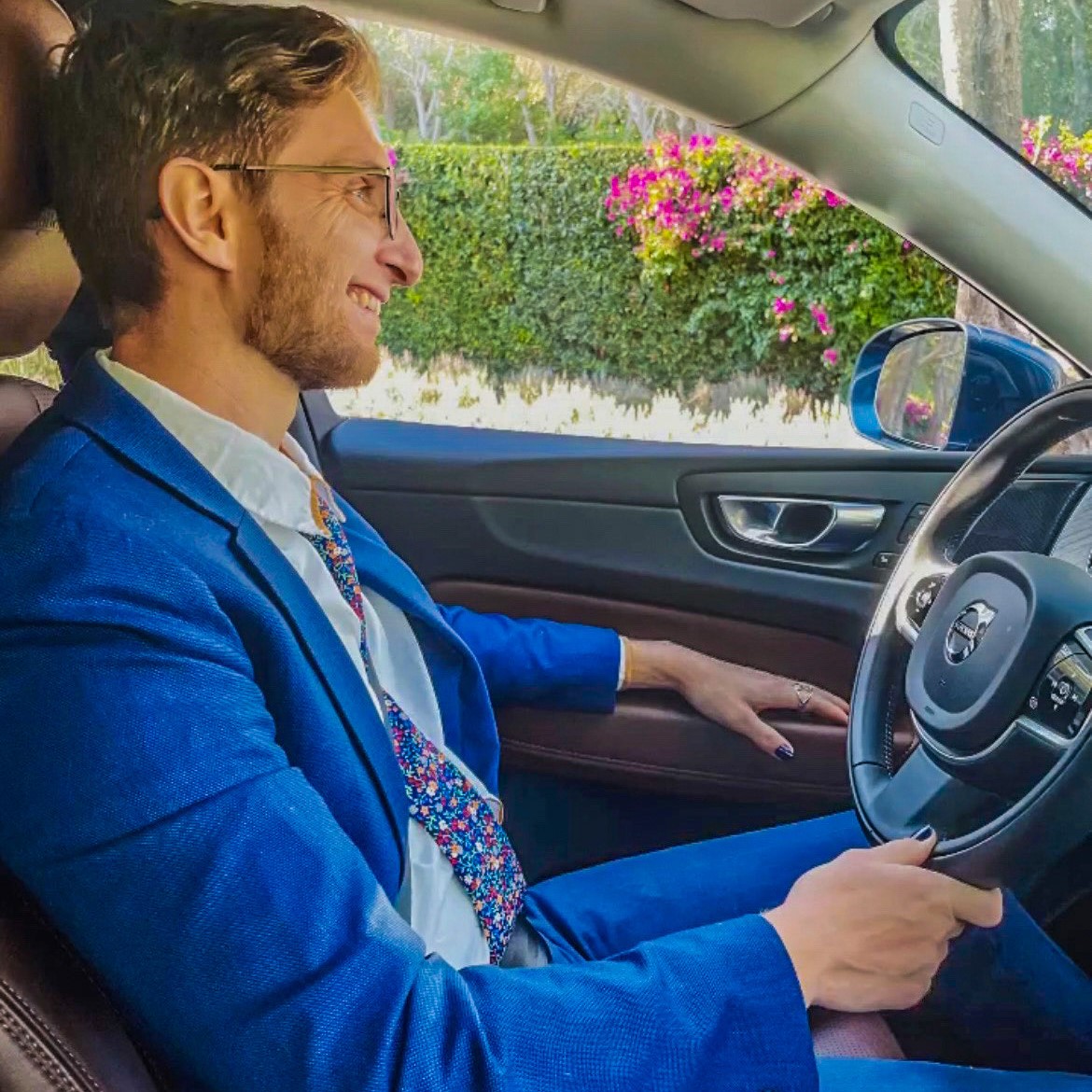
About Me

Welcome to my personal website! I am currently teaching philosophy at Marist College and Dutchess Community College both in Poughkeepsie, New York. I received my Ph.D in philosophy from the University of California, Santa Barbara in December 2025. In addition to teaching philosophy, I have several ongoing coding projects, most notably justinfer.com

More about me
Morgan Davies


Quotes from Anonymous Teaching Evaluations

Teaching

From years of teaching exprience and research on pedagogy, I've developed a variety of techiniques to keep students engaged and access their understanding. Most importantly though, I simply love being in front of a classroom or in office hours with a student. My father and grandfather were teachers and I learned from them that it is important not just to love the subject but to love teaching as well. I carry that lesson with me always.

More about teaching

Research

My recent research falls in the intersection of feminist philosophy, philosophy of language, and ethics. I have a particular interest in applying rigorous formal methodologies to explore and address critical issues in feminist philosophy and ethics. I believe that precise analytical tools can yield profound insights into complex ethical questions but that we have to be careful to not misapply, or overstate the impact of, these tools.

More about research

This project, which served as my dissertation, investigates three questions about consent: what moral difference consent makes, whether consent is necessary for sex to be morally benign, and which kinds of actions and arrangements fall within the domain of consent at all. I defend an authority-based view on which consent is a distinctive normative power by which individuals can make certain actions compatible with their authority. On this picture, consent is an exercise of “allowing authority” that can coexist with residual duties and other moral constraints. I argue that, properly understood, consent is morally necessary for benign sexual activity, and that recent attempts to sideline consent in sexual ethics rest on mistaken assumptions about what consent presupposes and how it operates in ideal cases. Finally, I address a puzzle about consent’s domain, focusing on requested actions and on the use of another’s labor or agency: I argue that it can be meaningful and important to speak of a person’s consenting not only to what others do to them, but also to what they themselves do at another’s behest, so long as we treat such “consent to do” as authorizing another’s use of one’s agency rather than as granting oneself permission. Taken together, the project presents consent as a unified permission-granting normative power that helps structure our moral landscape in sexual, medical, and labor contexts and beyond.

On Consent: Its Necessity and Its Domain

Philosophers such as David Chalmers, Cian Dorr, John Hawthorne, David Lewis, Gideon Rosen, Robert Stalnaker, Peter van Inwagen, Timothy Williamson, and Juhani Yli-Vakkuri, all have endorsed the thesis — call it 'Metaphysicalism' — that metaphysical possibility is the widest “genuine” type of possibility. Metaphysicalism entails that if a situation is not metaphysically possible, it cannot be genuinely possible in any other sense. Perhaps the most important aspect of this thesis is that virtually all defenses of S5 modal logic rely on it. Dorr and Hawthorne's new book, 'The Bounds of Possibility,' includes some of the most compelling arguments for Metaphysicalism and how Metaphysicalism (along with some uncontroversial premises) entails that S5 modal logic is correct. I summarize, clarify, and strengthen Dorr and Hawthorne’s arguments, but I also show that their view requires a controversial premise about which properties are one and the same. I argue against this premise but acknowledge that, if one were to endorse Metaphysicalism, this is the best way to do it. Implications about arguments for S5 modal logic are discussed.

On Absolute Possibility